top of page
Trollope's Friends, Colleagues, and Contemporaries
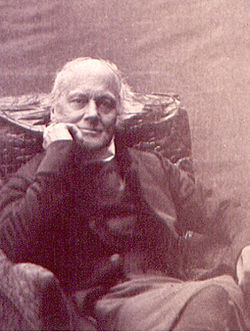 Reverend Charles Longley, Archbishop of York and Canterbury, Headmaster of Harrow School during Trollope's last two years at school (1831-3). | 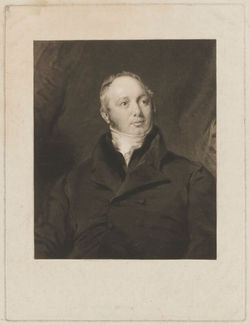 Reverend Henry (Harry) Joseph Thomas Drury (by Thomas Hodgetts, after Margaret Sarah Carpenter mezzotint, attributed, 1828), friend of Thomas and Fanny Trollope, Master at Harrow School and Trollope's tutor. |
|---|---|
 Reverend William Drury (attributed, 1860), a one-time Harrow schoolmaster who employed Trollope as a classical instructor in his Brussels academy in 1834. |  William Makepeace Thackeray (by Holl, steel engraving after Lawrence painting, circa 1853), author, editor, club partner and close friend of Trollope. Attributed. |
 Major General James Grant (by William Salter, oil on canvas, 1834-1840), British army officer serving in India, Sicily, Waterloo. Grant and his wife Penelope were neighbors of the Trollope family in Harrow in the early 1830s and helped care for them prior to their flight to Bruges. Attributed. |  William Wilkie Collins, author and friend of Trollope, 1903. |
 Elizabeth Barrett Browning (by Barlow, engraving of Havre photo, 1858), poet and friend of Trollope. |  Robert Browning, poet and playwright and friend of Trollope, 1865. |
 Charles Dickens, author and friend of Trollope, circa early 1860s. |  Nathaniel Hawthorne (by Charles Osgood, oil on canvas, 1840), author and friend of Trollope. |
 Charles James Lever (by Octavius, Charles Watkins albumen CDV, late 1860s/early 1870s), author and friend of Trollope. Attributed. |  George Housman Thomas, artist, engraver and illustrator, completed the illustrations for The Last Chronicle of Barset. |
 William Gladstone, liberal statesman and two-time Prime Minister, acquaintance of Trollope; Trollope immortalized him in The Fixed Period, naming the fictional capital city of Gladstonopolis after him. |  Benjamin Disraeli, Earl of Beaconsfield, conservative politician, Prime Minister, writer and acquaintance of Trollope; Trollope was generally critical of Disraeli's politics and his fiction writing. |
 George Bartley, actor, stage manager and friend of Trollope whose criticism of The Noble Jilt caused Trollope to abandon the project. |  Henry James, American-born writer and critic and acquaintance of Trollope's, circa 1922. |
 Henry John Temple Palmerston, 3rd Viscount, "liberal conservative" politician, Prime Minister and Foreign Secretary; Trollope greatly admired his politics and policies and wrote a short memoir, Lord Palmerston, as one of his final works. |  Emily Faithfull, women's rights activist, writer, publisher and friend of Trollope; he contributed several short stories to her periodical, Victoria Magazine. |
 Marcus Stone, RA, painter and illustrator, completed the illustrations for He Knew He Was Right. Attributed. |  Charles Merivale, historian, writer, dean of Ely Cathedral and friend of Trollope. He was the older brother of Trollope's lifelong friend John Merivale. |
 Sir Leslie Stephen, author, essayist, editor of Cornhill Magazine and Directory of National Biography, friend of Trollope and contributor to Saint Paul's Magazine, circa 1860; Stephen was the father of novelist Virginia Woolf. |  Frederick Locker-Lampson, civil servant, poet, Trollope's friend and club mate at the Cosmopolitan and Athenaeum; he contributed poetry to Saint Paul's Magazine. |
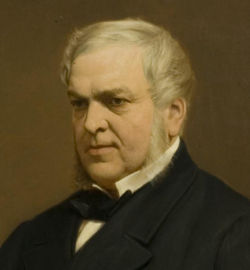 John Forster, writer, Dickens' first biographer, editor of The Examiner and friend of Trollope; Forster published Trollope's earliest non-fiction articles (on Irish affairs) in 1849-1850. |  George Goschen, 1st Viscount Goschen, businessman, director of the Bank of England and friend of Trollope; he contributed several articles to Saint Paul's Magazine. |
 Alexander Ireland, Scottish journalist and publisher and acquaintance of Trollope; he hosted Trollope's Manchester lectures and serialized Cousin Henry in his Manchester Weekly Times. |  William Small, painter and illustrator, completed the illustrations for Marion Fay, circa 1882. |
 John Leech, illustrator of Dickens' A Christmas Carol, head caricaturist of Punch magazine and friend of Trollope, circa 1859-1870. |  Robert Bell (by Clarkington & Co - Charles Clarkington, albumen CDV, 1860), author and close friend of Trollope. Attributed. |
 Herman Merivale, professor, historian, undersecretary for India and friend of Trollope; he was the older brother of Trollope's lifelong friend, John Merivale. |  William Wilkins Glenn, American journalist and newspaper owner and friend of Trollope; he hosted Trollope in Baltimore and was a periodic visitor at Waltham. |
 Sir Evelyn Wood, Adjutant General serving in Crimea and India, hunting partner and friend of Trollope. |  Anna Caroline Steele, author and playwright, close friend and hunting partner of Trollope's, circa 1900. |
 Henry Danby Seymour, politician, writer, early partner of the Fortnightly Review and friend of Trollope. |  Lord William Brougham, 2nd Baron Brougham and Vaux, barrister and politician and friend of Trollope; Trollope helped edit his memoirs. Circa 1876. Attributed. |
 John Robert Godley, Irish writer and statesman, founder of Canterbury in New Zealand, and schoolmate of Trollope's at Harrow; Trollope dedicated a chapter to Godley in Australia and New Zealand. |  William Luson Thomas, artist, engraver, publisher and founder of The Graphic weekly newspaper, which serialized several of Trollope's novels and short stories. |
 Philip Stanhope, 5th Earl Stanhope (by Thomas Richard Williams, albumen CDV, 1864, given by Algernon Graves, 1916), politician, president of the Royal Literary Fund, sponsor of the creation of the National Portrait Gallery, and Trollope's friend and club mate at the Athenaeum. Attributed. |  Gustavus Cornwall, Secretary of the Dublin GPO during Trollope's tenure, hosted Trollope during his last Irish trips, circa 1884. |
 William Edward Forster, industrialist and politician, member of the Athenaeum and Cosmopolitan Clubs, friend of Trollope and one of his regular whist partners. Attributed. |  Francis (Frank) Montague Holl, RA (by Lock & Whitfield, published by Sampson Low, Marston, Searle and Rivington, woodbury type, published 1883), painter and illustrator who completed the illustrations for Phineas Redux. Attributed. |
 Henry Molyneux Herbert, 4th Earl Carnarvon, politician and statesman, Secretary of State for the Colonies and friend of Trollope; he hosted Trollope at Highclere Castle on various occasions. |  Rhoda Broughton, Welsh writer of popular and sensational fiction, and friend of Trollope; Trollope was critical of some of her early work, but she built a successful career. |
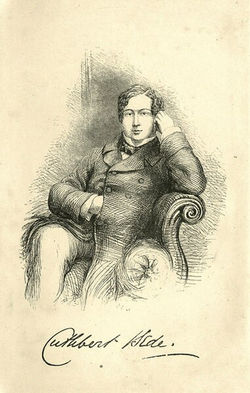 Reverend Edward Bradley, cleric, illustrator and writer (penname Cuthbert Bede), friend of Trollope who periodically assisted with editing at Saint Paul's Magazine. |  William Monsell, 1st Baron Emly, landowner, statesman and Post Master General; he was a schoolmate of Trollope's at Winchester and hosted him during his Irish travels, circa 1860. |
 Edward Dicey, journalist, writer, and editor, acted as sub-editor under Trollope at Saint Paul's Magazine, circa 1865. |  Sir Stafford Northcote, 1st Earl of Iddesleigh, Chancellor of the Exchequer and Civil Service reformer, caricatured by Trollope in The Three Clerks, circa 1870s. |
 Matthew Higgins, writer for Cornhill Magazine, Pall Mall Gazette and other periodicals (under the penname Jacob Omnium), and close friend of Trollope. |  Henry Austin Dobson, poet and essayist and friend of Trollope, circa 1906. |
 Thomas William Anson, 1st Earl of Lichfield (when Viscount Anson, by and published by Charles Turner, after Thomas Phillips mezzotint, published 24 April 1823 (1819)), politician, Master of Buckhounds and Postmaster General during Trollope's first years at the GPO; he reprimanded Trollope for his performance and ultimately approved his transfer to Ireland. Attributed. |  Sir George Jessel (by Lock and Whitfield, woodbury type, 1881 or before), barrister, politician, jurist, Trollope's colleague at the Royal Literary Fund and regular whist partner at the Athenaeum. Attributed. |
 General Sir Henry Brackenbury, military officer, contributor to Saint Paul's Magazine, and friend of Trollope, circa 1904. |  Sir Henry James, 1st Baron James of Hereford, lawyer, Solicitor General, Attorney General and close friend of Trollope, circa 1882. |
 Eneas Sweetland (ES) Dallas, journalist, critic and editor, Garrick club colleague of Trollope's and supporter of his early work. |  Henry Woods, painter and illustrator, completed the illustrations for The Vicar of Bullhampton. |
 Sir Richard Quain, Harley Street physician, editor of the Dictionary of Medicine, Physician Extraordinary for Queen Victoria, and Trollope's own physician in his final years, circa 1881. |  Matthew Arnold, civil servant, writer and poet, and friend of Trollope, circa 1883. |
 James Edward Sewell, academic, warden of New College, Oxford, and friend and hunting partner of Trollope, circa 1885. |  Sir William Howard Russell, journalist and war correspondent and close friend of Trollope, circa 1905. |
 Alfred Austin, author and poet laureate and close friend of Trollope, circa 1900. |  John Morley, 1st Viscount Morley of Blackburn (by W. & D. Downey, published by Cassell & Company, carbon print, published 1890). Morley, an MP, was editor of The Fortnightly Review (1865-1882) and Pall Mall Gazette (1880-1883), working closely with Trollope. Attributed. |
 Mary Ellen Edwards, painter and illustrator, completed the illustrations for The Claverings. |  Henry O'Neil, RA, artist and writer and close friend of Trollope; O'Neil painted Trollope's portrait for The Garrick. Circa 1860's. Attributed. |
 Richard Henry Dana, American lawyer and politician, and friend of Trollope, circa 1868. |  Walter Herries Pollock, author and editor of The Saturday Review and close friend of Trollope, circa 1895. |
 Gustavus Hare, Commissioner of Police in Albany, Australia, Trollope's schoolmate at Winchester, and host during his Australian trips. |  Sir Charles Trevelyan, 1st Baronet, Civil Service reformer and Colonial administrator; Trollope caricatured him in The Three Clerks -- the two would later become close friends. |
 Charles Allston Collins, painter and writer, brother of author Wilkie Collins and friend of Trollope. | 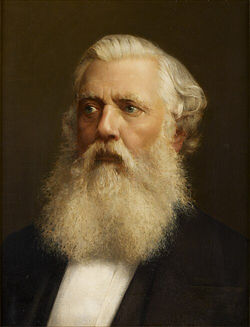 Sir Austen Henry Layard, archaeologist, politician and writer, and close friend of Trollope, circa 1890. |
 Anne Thackeray Ritchie, author and eldest daughter of William Makepeace Thackeray, and friend of Trollope, circa 1870. |  Henry Stuart Russell, politician, explorer and historian, who emigrated to Australia in 1840. He was a classmate of Trollope's at Harrow (1831-33) and became acquainted with Fred Trollope in Australia. |
 Mary Penniman (nee Knower), widow of American oil merchant Sam Penniman, and friend of Trollope, circa 1883. |  Edward Chapman, co-founder of Chapman and Hall, Trollope's publisher. He retired from the firm in 1866, giving control to his nephew, Frederic. |
 William Longman, head of Longman and Sons, publisher of Trollope's "breakthrough" novels The Warden and Barchester Towers. He rejected The New Zealander, The Three Clerks and The Struggles of Brown, Jones and Robinson. | 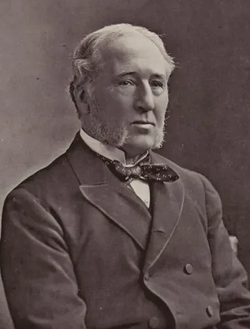 Frederick Greenwood, editor and publisher's reader; Greenwood was editor of Cornhill Magazine and Pall Mall Gazette during the time Trollope made his contributions. |
 George Hamilton, Commissioner of Police, Adelaide, schoolmate of Trollope's at Harrow and host during his Australian trips. |  Sir William Henry Gregory (by Frederick Hollyer, photogravure, 1870's), MP for Galway and Dublin and Governor of Ceylon, schoolmate and later close friend of Trollope. Attributed. |
 William Webb Follett Synge (by Camille Silvy, albumen print, February 1862), diplomat, author and close friend of Trollope; the two first met in Costa Rica in 1859 during Trollope's West Indies trip. Attributed. |  EA Freeman, historian, author and close friend of Trollope; before Trollope's death he told Freeman "Barset was Somerset, but Barchester was Winchester, not Wells"; circa 1892. |
 Richard Monckton Milnes, 1st Baron Houghton, writer, poet and politician, friend of Trollope who sponsored his membership at the Cosmopolitan Club. |  John Burns, 1st Baron Inverclyde, partner and later Chairman of Cunard Shipping, friend of Trollope and host of the "Mastiffs" trip to Iceland, 1901. |
 Colonel William Maberly, Trollope's superior when he joined the GPO in 1834; appointed Secretary of the GPO (1836-1854). |  John Rushout, 2nd Baron Lord Northwick, peer and politician, and Thomas Trollope's landlord (Illots/Julians), circa 1794. |
 Sir William Frederick Pollock, barrister and author and close friend of Trollope; neighbors at Montagu Square. |  Charles Dickens Jr., publisher of All the Year Round, which serialized several of Trollope's later works, 1874. |
 Charles Bianconi, Italian/Irish businessman, Mayor of Clonmel, and developer of the transport coach used for mail delivery, and friend of Trollope. |  John Murray II (by Edward Francis Finden, stipple engraving, 1837), head of the J.Murray publishing house; Murray published Fanny Trollope's Belgian/German travel book and Thomas Trollope's Encyclopedia Ecclesiastica; he requested, but failed to read, Trollope's first efforts at an Irish guidebook. Attributed. |
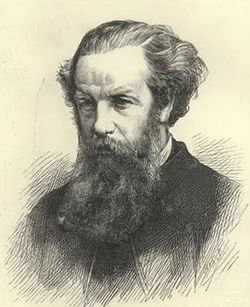 Charles Buxton, MP of East Surrey, brewer, philanthropist and close friend of Trollope; he introduced Trollope to the Essex hunts following the move to Waltham. |  Charles William Shirley Brooks (by Elliott and Fry, albumen CDV, 1860s), author and editor of Punch and friend of Trollope. Attributed. |
 Margaret Oliphant, Scottish novelist and historian and friend of Trollope; Trollope featured her work in St. Paul's Magazine, circa 1890s. |  Fletcher Harper, co-founder of Harper and Brothers, Trollope's primary American publisher. Attributed. |
 George Smalley, journalist and head of London branch of the New York Tribune, and friend of Trollope, 1895. |  Sir Charles Taylor, 2nd Baronet Hollycombe, member of the Garrick Club and close friend of Trollope. |
 Charles Mudie, founder of Mudie's subscription and circulating Library, circa 1870s. Trollope's books were very popular at Mudie's. |  William Powell Frith, RA, painter and friend of Trollope; Frith depicted Trollope in 1881's Private View of the Royal Academy. |
 James T. Fields, publisher and editor of Boston-based The Atlantic, and friend of Trollope, circa early 1880s. |  William Henry Smith (WH Smith) (by Elliot and Fry, albumen CDV, 1877-1880), head of WH Smith booksellers and circulating library. Trollope's books were available in the Smith library, shops and, after 1848, railway stalls. Attributed. |
 George Rusden, author and historian who lived much of his life in Australia, close friend of Trollope, 1885. |  Charles Gordon, Marquess of Huntley, hunting partner and friend of Trollope, 1882. |
 Elizabeth Gaskell (by George Richmond, chalk, 1851), author and admirer of Trollope's work; the two corresponded but missed meeting in person before her sudden death. Attributed. |  Lord Edward John Stanley, 2nd Baron of Alderley, Postmaster General (1860-66) during Trollope's last years at the GPO, circa 1865. |
 Alexander Macmillan, head of Macmillan Publishers and close friend of Trollope, circa 1891. |  Amelia B. Edwards, author, journalist and Egyptologist, and friend of Trollope, circa 1890. |
 Christian Bernhard von Tauchnitz, founder of Bernhard Tauchnitz publishers, Leipzig, Trollope's primary European publisher. | 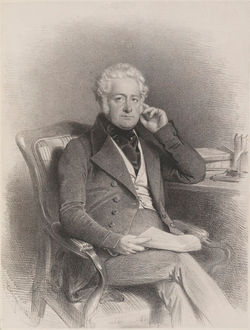 Richard Bentley (by Charles Baugniet, lithograph,1884), Trollope's and Fanny Trollope's publisher. Attributed. |
 William Blackwood III, head of publisher Blackwood & Sons after 1879 and friend of Trollope. |  George Eliot (Mary Ann Evans) (by Sir Frederic William Burton, chalk sketch, 1865), author and close friend of Trollope. Attributed. |
 Thomas Hay Sweet (THS) Escott, author and editor of The Fortnightly Review, friend of Trollope and his first biographer, circa 1914. |  John Blackwood, head of publisher Blackwood & Sons and close friend of Trollope, circa 1878. |
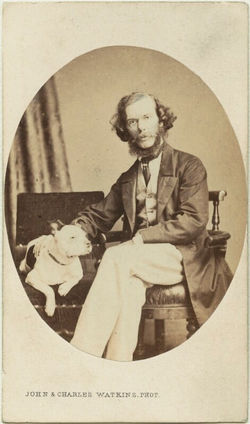 George Henry Lewes (John and Charles Watkins albumen CDV, 1864, attributed), writer, critic and close friend of Trollope. |  Frederic Chapman, head of publisher Chapman and Hall (succeeding his uncle Edward in 1866) and close friend of Trollope. |
 Sir Rowland Hill (John Alfred Vinter, after Maull & Polyblank oil on canvas, circa 1879, based on a work published in April 1857, attributed), Secretary of the Post Office (1854-1864) during Trollope's tenure. |  Sir Francis Freeling (oil by George Jones, circa 1830, attributed), Secretary of the Post Office (1798-1836), at the time of Trollope's joining. |
 George Smith (John Collier, oil on canvas, 1901, attributed), head of publisher Smith, Elder and Cornhill Magazine and close friend of Trollope. |  Kate Field, American writer, actress, lecturer and close friend and correspondent of Trollope. |
 "Authors & Novelists" (published by Hughes & Edmonds, albumen print, 1876, attributed), featuring Trollope and his contemporaries. |  "A Memorable Night of Whist at the Athenaeum (Anthony Trollope, Right Hon. WE Forster, Abraham Haywood, Sir George Jessel)." |
 Sir John Everett Millais, 1st Baronet, RA (George Frederic Watts, oil on canvas,1871, attributed), painter, illustrator and close friend of Trollope. He completed illustrations for Framley Parsonage, Phineas Finn, Orley Farm and The Small House at Allington. |
bottom of page